

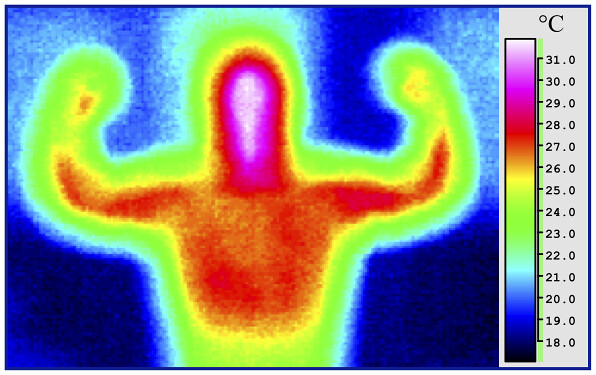
Scientific studies indicate that the temperature at which humans feel comfortable does not exceed 31°C. Despite variations based on numerous criteria, most perspectives based on the concept of thermal comfort are usually lower than 31°C. In the past, 35°C was classified as the maximum threshold for human endurance within comfort limits, but that has changed. Humidity is also taken into account; comfort limits decrease as humidity increases [1]. One study found that this limit—specifically 32°C—is the temperature at which humans begin to sweat, marking the threshold of human thermal comfort [2]. This does not mean that humans are incapable of living above this degree, but they will likely require means for cooling, thermal insulation, or underground living; otherwise, they will face health and psychological impacts that we will address.
Researchers from the University of Helsinki found that the highest productivity for employees occurs at temperatures ranging between 21°C and 22°C, and that every degree of increase above that led to a 2% drop in productivity [3].
According to research from the University of Roehampton in England, the human body loses its ability to shed high heat and stops functioning optimally when the temperature exceeds 40°C. At 40°C, studies also found that changes in the body’s metabolic rate begin to occur. These metabolic changes include an increased heart rate, and rates of sweating and breathing that increase by 23%; the volume of air inhaled and exhaled by individuals also increases by 78%. The study also compared conditions at 50°C with 40°C and found a higher increase in the metabolic rate at the higher temperature [4]. Naturally, humans adapt to the climate they live in, but not to as great an extent as we might imagine.
An American university conducted a test on students in air-conditioned and non-air-conditioned rooms during a heatwave in July. Researchers found that response times in a color-word test increased by 13%, meaning that students in the hot rooms were slower to answer compared to those who took the test in air-conditioned rooms [5]. Given that the temperature did not exceed 30°C in the study, what about students in the Arab world who take exams without air conditioning in hot, above-ground classrooms lacking thermal insulation?
Emergency department visits for mental health conditions increase on extremely hot days, according to a study conducted in the United States. Cases related to substance abuse, anxiety, stress, mood disorders, schizophrenia, delusions, self-harm, and behavioral disorders that manifest in childhood all increase on very hot days, as do hospital emergency visits related to these conditions. Many of these cities do not see temperatures over 40°C, yet this profound change is observed [6].
In a study conducted in the United States on 9,500 pregnancies, taking all other factors into account, it was found that heat significantly affects fetal growth as measured by abdominal and head circumference. It was found that these are severely impacted if the mother is exposed to heat during pregnancy [7][8].
The first psychological statistical research conducted to find the relationship between heat and rates of aggression and crime was in 1910 by the Italian criminal psychologist Cesare Lombroso. He noted a difference between autumn and summer in crime rates and observed an increase in suicide rates. He also noted that in the winter of 1895, when temperatures reached their lowest point in 50 years, crimes decreased significantly, as did sexual assaults, while suicide rates and attempts dropped by half. Additionally, in 1983, researchers conducted a study finding a clear correlation between heat and homicides in various regions of the United States, where the total annual homicide rate was proportional to the number of hot days in the year [9].
Workplace injuries also increase in hot weather, especially when temperatures rise from 29°C to 32°C; this increase brings higher risks of falls, collisions with vehicles or machinery, or errors while operating machines [10].
As we have seen, thermal discomfort is not merely a matter of luxury but must be viewed with responsibility toward physical and mental health. Adopting underground construction methods or using effective thermal insulation and low-energy technologies is the responsibility of anyone building a home, as it carries numerous consequences for the individual and their descendants.
[1] Bohn, K. “Humans can’t endure temperatures and humidities as high as previously thought.” Retrieved from The Pennsylvania State University: https://www. psu. edu/news/research/story/humans-cant-endure-temperatures-and-humiditieshigh-previously-thought (2022).
[2] Stolwijk, J. A., and J. D. Hardy. “Partitional calorimetric studies of responses of man to thermal transients.” Journal of Applied Physiology 21.3 (1966): 967-977.
[3] How hot is too hot for the human body? Study offers new insights, Written by Annie Lennon on July 20, 2023 — Fact checked by Jill Seladi-Schulman, Ph.D.
[4] Henderson, Mary ET, Daniel Brayson, and Lewis G. Halsey. “The cardio‐respiratory effects of passive heating and the human thermoneutral zone.” Physiological Reports 9.16 (2021): e14973.
[5] Laurent, Jose Guillermo Cedeño, et al. “Reduced cognitive function during a heat wave among residents of non-air-conditioned buildings: An observational study of young adults in the summer of 2016.” PLoS medicine 15.7 (2018): e1002605.
[6] Nori-Sarma, Amruta, et al. “Association between ambient heat and risk of emergency department visits for mental health among US adults, 2010 to 2019.” JAMA psychiatry 79.4 (2022): 341-349.
[7] The dangers of heat during pregnancy, January 12, 2023
[8] Leung, Michael, et al. “Ambient temperature during pregnancy and fetal growth in Eastern Massachusetts, USA.” International journal of epidemiology 52.3 (2023): 749-760.
[9] عمر المريواني، أثر حرارة الجو على السلوك العدائي والاجرام، 14 يونيو 2013، العلوم الحقيقية
[10] Nearly 28,000 Work Injuries Every Year are Linked to Hot Weather, October 6, 2025, Milken Institute School of Public Health
0 Comments