

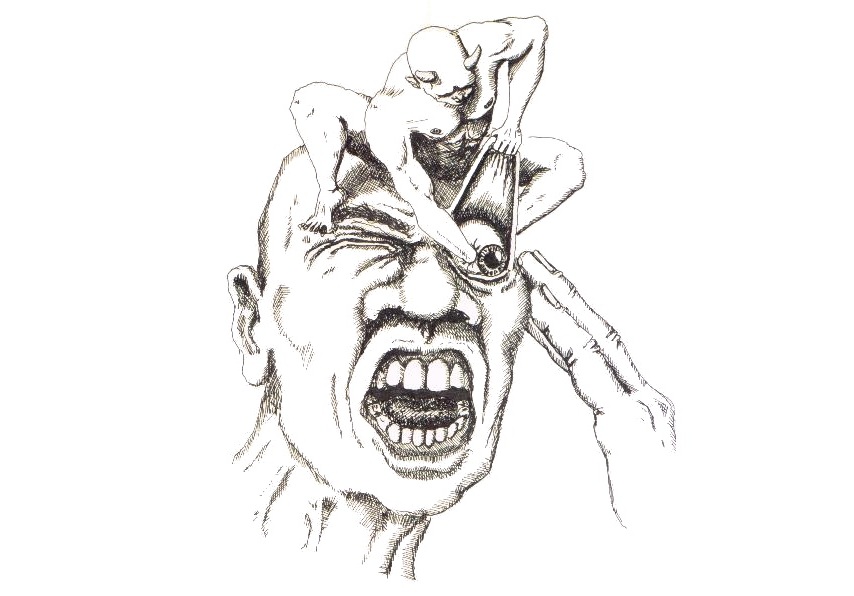
Cluster headache is one of the most painful conditions in medicine. While it shares the word “headache” with common head pain, it differs from it in many fundamental ways. Cluster headaches occur on only one side of the head, specifically around or behind the eye, and the pain is often described as stabbing, boring, burning, or squeezing. What characterizes this condition is that it occurs in bouts (cycles) at highly specific times, sometimes even striking at the exact same time of the year, every year. It presents in two forms: episodic (occurring in cycles) and chronic (continuous). An individual attack lasts between 15 and 180 minutes, and the cycle of attacks—known as a “cluster period”—can last from several days to several months.
Dr. Peter Goadsby, Professor of Clinical Neurology at University College London and a leading advocate for cluster headache organizations, commented:
“Cluster headache is probably the worst pain humans can experience. I know that’s a very strong statement to make, but if you ask a cluster headache patient if they have ever experienced worse pain, they will universally agree they haven’t. Women who suffer from cluster headaches will tell you that a single attack is worse than childbirth. So, you can imagine that these individuals are going through the experience of giving birth without anesthesia once or twice a day, for six, eight, or ten weeks at a time, and only then do they get a break. It is truly horrific.”
As agonizing and debilitating as cluster headaches are for those who endure them, the condition is scientifically fascinating because it sheds light on how the brain and pain processing systems function in the body. In this article, we will outline some general facts from scientific research regarding the condition; however, this is not a basic introductory guide. To explore the general clinical characteristics of the condition, please refer to the comprehensive Wikipedia article on the subject.
Cluster Headaches Are Not Primarily Driven by Psychological Factors
It is often tempting to assume that everything originating in the brain must be linked to our conscious psychological experiences, such as mood and emotions. However, scientific research offers very little evidence linking psychological factors—such as childhood trauma, psychological stress, depression, or anxiety—to the onset of cluster headaches.
In reality, we are only consciously aware of a fraction of what happens inside our brains. A large portion of brain activity operates entirely outside our familiar, conscious experiences, including the foundational biological regulations we share with animals. The lack of correlation with psychological factors suggests that cluster headaches are tied to a different neurological domain, especially given that cycles are triggered by physical shifts like changes in the weather, distinct odors, or alterations in diurnal (daily) cycles. This highlights the involvement of brain regions like the hypothalamus, which regulates the circadian rhythm, among other structures. Concurrently, psychological interventions like psychotherapy or treating depression have shown little to no efficacy in altering the course of the headache itself.
While brain phenomena are deeply complex and interconnected—leaving open the possibility that future science might uncover a psychological link—what we currently know indicates that cluster headaches belong to an entirely different neurological realm, independent of what we typically categorize as mood.
Life Despite the Utmost Degrees of Pain
A researcher recently conducted a study comparing depression rates among individuals with cluster headaches, migraines, and tension-type headaches as part of a doctoral thesis at the University of East Anglia in the UK [1]. The researcher discovered that although cluster headache sufferers do experience depression, their rates were not significantly higher than those found in migraine patients. Remarkably, the data showed no statistical difference in depression rates between those suffering from ordinary tension headaches and those enduring cluster headaches. In fact, one specific analysis indicated that individuals with ordinary tension headaches exhibited slightly higher rates of depression.
The researcher also analyzed the core psychological themes reported by cluster headache patients, identifying dominant motifs such as: Darkness, Battle, Transition, Control, and Despair. Notable variations in these themes were observed depending on whether the patient was experiencing an active attack versus an interim period, and whether they suffered from chronic or episodic cluster headaches.
In an interview, a medical doctor who also suffers from the condition noted that cluster headaches demonstrate the profound human capacity to both generate and endure such extreme levels of pain. Furthermore, while these attacks are colloquially referred to by some as “suicide headaches,” data from suicide statistics and clinical studies show that they are rarely a direct cause of suicide.
The Role of NF-κB in Chronic Inflammation: Unifying Neurology and Gastroenterology
Inflammation is a vital biological response, but when it becomes dysregulated, it drives severe chronic illnesses. At the heart of this inflammatory process sits a protein complex that acts as a “master switch” for the body’s immune responses.
What is NF-κB?
NF-κB stands for nuclear factor kappa-light-chain-enhancer of activated B cells. It is a family of transcription factors that play a critical role in the immune response, serving as a first responder to harmful stimuli such as bacteria or viruses. This nuclear factor also promotes cell survival by regulating genes that keep cells alive under stress (which gives it a dual role in the development and treatment of certain cancers). However, its most prominent role is in inflammation, where it triggers the production of cytokines—the signaling molecules that order the body to maintain an inflammatory state.
Although NF-κB is a master regulator, it belongs to a broader class of transcription factors with overlapping roles in the body, such as AP-1, STAT3, and the IRF family. All of these proteins function by “reading” DNA to dictate how a cell reacts to its environment. We are looking at a cellular agent working alongside many other similar pathways in the body.
The Gut-Brain Connection: Migraines and Gastrointestinal Health
Recent scientific evidence has begun bridging the gap between digestive health and neurological pain. According to research published in The Journal of Headache and Pain titled “Gastrointestinal disorders associated with migraine: a comprehensive review” [2]:
“Helicobacter pylori infection, irritable bowel syndrome (IBS), gastroparesis, hepatobiliary disorders, celiac disease, and alterations in the microbiota have been linked to the occurrence of migraines.”
This indicates that what happens in the gut does not stay in the gut; systemic inflammatory markers and digestive dysregulations can directly impact the frequency and severity of neurological headache attacks.
Cluster Headaches vs. Migraines: A Scientific Overlap
Patients suffering from cluster headaches often feel frustrated when their condition is mistaken for an ordinary migraine. Cluster headaches are notoriously more intense and follow a strict, clock-like chronological pattern. However, clinical science reveals they are more closely related than they appear.
The two conditions share triggers like stress, alcohol, and sensitivity to light or sound. They also share physical autonomic signs such as tearing (lacrimation) and eye redness (conjunctival injection). Research in The Journal of Headache and Pain highlights these similarities [3]:
“While cluster headache and migraine differ in multiple aspects such as gender-related features and headache characteristics… both exhibit clinical similarities in triggering factors (e.g., alcohol) and treatment response (e.g., triptans)… and share some non-headache symptoms like photophobia or cranial autonomic symptoms.”
Both conditions likely involve the trigeminovascular system and the hypothalamus, suggesting that despite differing pain profiles, the underlying biological pathways overlap significantly. Furthermore, both cluster headaches and migraines are characterized by unilateral pain (occurring on one side of the head).
If you suffer from cluster headaches and find it annoying when people conflate the two, realize that it is not just the general public or outdated doctors doing so—scientific researchers do too, simply because of the deep biological similarities between the conditions [4].
Additionally, cluster headaches are frequently misdiagnosed as other conditions, such as SUNCT syndrome or trigeminal neuralgia. Trigeminal neuralgia rivals cluster headaches as one of the most painful conditions known to medicine, but it differs because its pain strikes in brief flashes rather than prolonged attacks, and it typically targets a different age demographic.
NF-κB as a Shared Therapeutic Target
NF-κB regulates inflammation in both the brain and the gut, making it a major focus for multi-disciplinary medical research. For instance, researcher Dr. Anna Andreou conducted a study investigating the link between NF-κB and cluster headaches:
“What Dr. Andreou and her colleagues demonstrated is that NF-κB is indeed a primary mediator of inflammatory responses… and it is highly probable that it plays a role in cluster headaches. The team also proved that targeting the NF-κB pathway could serve as a future therapeutic avenue.” [5]
Concurrently, this same factor plays a primary role in Inflammatory Bowel Disease (IBD), as detailed in a landmark study [6]:
“The persistent activation of NF-κB in patients with active inflammatory bowel disease indicates that regulating NF-κB activity is a highly attractive target… [including] antioxidants, proteasome inhibitors… and targeting antisense DNA against NF-κB.”
While these studies are promising, they have not yet reached the stage of clinical guidelines for suppressing or regulating NF-κB to cure cluster headaches or migraines. However, for those looking to naturally modulate this pathway for general health benefits, one effective method is consuming polyphenols. These are micronutrients found in various plant-based foods, such as:
-
Turmeric (Curcumin)
-
Green Tea (EGCG)
-
Red Grapes and Berries (Resveratrol)
-
Dark Chocolate (Flavonoids)
Polyphenols exert antioxidant and immunomodulatory effects by specifically targeting and reducing NF-κB activity. It is important to note that polyphenols are just one example of natural approaches that can help manage this pathway, alongside other medical and lifestyle interventions.
The Relationship Between Cluster Headaches and Smoking
Statistics on tobacco use and cluster headaches reveal that more than 60% of patients are active smokers, while fewer than 20% have never smoked. This shows that while smoking may not be the sole cause of the condition, it is heavily prevalent in the lives of cluster headache sufferers.
Despite the statistical tendency of cluster headache patients to smoke, tobacco use significantly worsens the condition. It increases the duration of cluster periods, multiplies the number of daily attacks, and heavily contributes to transforming episodic cluster headaches into the chronic, unremitting form.
The damaging impact of smoking lies in its effect on orexin (hypocretin) in the brain. Orexin is a neuropeptide regulated by the hypothalamus that governs wakefulness, appetite, and energy balance [7]. It is widely known for its involvement in medical conditions like narcolepsy, where a total lack of orexin causes sudden muscle weakness (cataplexy) and sleep attacks. This raises an interesting medical question: what if we could stimulate the reverse effect? Studies on mice, for instance, demonstrate that physical exercise can naturally increase orexin levels [8].
The Link Between Cluster Headaches and Alcohol Consumption
Alcohol consumption is a notorious and immediate trigger for cluster headache attacks during an active cycle. While the exact mechanism remains under investigation, research points to genetic variations in the alcohol dehydrogenase (ADH4) gene among sufferers [9]. Interestingly, the behavioral inclination to consume alcohol does not mirror the heavy pattern seen with smoking. A study conducted on 246 German cluster headache patients revealed that they actually consume less alcohol on average than the general German population [10].
The Impact of Physical Exercise
A clinical case report tracking a young male patient with cluster headaches showed that performing moderate-to-high intensity aerobic exercise exactly at the predicted onset time of an attack significantly reduced both the frequency of the attacks and the intensity of the pain [11].
Similarly, a large patient registry study in South Korea found that 23 out of 46 patients who attempted exercise during a cluster period witnessed a noticeable abortive improvement in their symptoms [12]. The exercises that patients found effective included running, squats, and stair climbing. The study noted that high-intensity exercise was beneficial for 52% of those who tried it, while moderate-intensity exercise helped 43%. Remarkably, 18 out of the 23 patients who benefited from exercise reported that it was the most effective abortive measure they had ever used—even when compared to standard medical treatments like triptans and oxygen therapy.
Symptom Variability: Hope and Challenge
There is immense clinical variability in the symptoms of cluster headaches, which provides a source of hope for some patients but introduces challenges for standardized treatment. Scouring patient experiences online reveals that what provides relief for one individual may completely fail for another. This divergence is likely due to the highly individualized nature of the human nervous system and the complex overlapping of various neurological functions.
A large-scale cohort study tracking over 800 patients thoroughly documented this wide variability in symptoms [13]. For this reason, if you find that standard remedies tried by others do not work for you, it is not a reason to despair. It simply means you need to work with medical specialists to find the specific tailored intervention that suits your biology. Most patients eventually find the right therapeutic regimen that suppresses the pain down to a manageable and tolerable level. The location of the pain, its severity, its exact triggers, its duration, its frequency, and its psychological impacts vary deeply from person to person.
References:
-
Whitley, Helena. An Exploration of the Psychological Aspects of Cluster Headache. Diss. University of East Anglia, 2025.
-
Cámara-Lemarroy, Carlos R., et al. “Gastrointestinal disorders associated with migraine: a comprehensive review.” World Journal of Gastroenterology 22.36 (2016): 8149.
-
Al-Karagholi, Mohammad Al-Mahdi, et al. “Debate: Are cluster headache and migraine distinct headache disorders?.” The Journal of Headache and Pain 23.1 (2022): 151.
-
Vollesen, Anne Luise, et al. “Migraine and cluster headache–the common link.” The Journal of Headache and Pain 19.1 (2018): 89.
-
Dr. Anna Andreou, Understanding the role of inflammation in cluster headache, June 2025.
-
Neurath, M. F., C. Becker, and K. Barbulescu. “Role of NF-κB in immune and inflammatory responses in the gut.” Gut 43.6 (1998): 856-860.
-
Rozen, Todd D. “Linking cigarette smoking/tobacco exposure and cluster headache: a pathogenesis theory.” Headache: The Journal of Head and Face Pain 58.7 (2018): 1096-1112.
-
España, Rodrigo A., et al. “Running promotes wakefulness and increases cataplexy in orexin knockout mice.” Sleep 30.11 (2007): 1417-1425.
-
Rainero, Innocenzo, et al. “Cluster headache is associated with the alcohol dehydrogenase 4 (ADH4) gene.” Headache: The Journal of Head and Face Pain 50.1 (2010): 92-98.
-
Schürks, M., et al. “Predictors of hazardous alcohol consumption among patients with cluster headache.” Cephalalgia 26.5 (2006): 623-627.
-
Marcotte-Chénard, Alexis, et al. “Exercise as a promising strategy to manage cluster headache pain: a case report.” Douleur et Analgésie 33.3 (2020): 157-161.
-
Kang, Mi‐Kyoung, Yooha Hong, and Soo‐Jin Cho. “Exercise as an abortive treatment for cluster headaches: Insights from a large patient registry.” Annals of Clinical and Translational Neurology 12.1 (2025): 149-157.
-
Göbel, Carl H., et al. “Phenotype of cluster headache: clinical variability, persisting pain between attacks, and comorbidities—an observational cohort study in 825 patients.” Pain and Therapy 10.2 (2021): 1121-1137.
0 Comments