

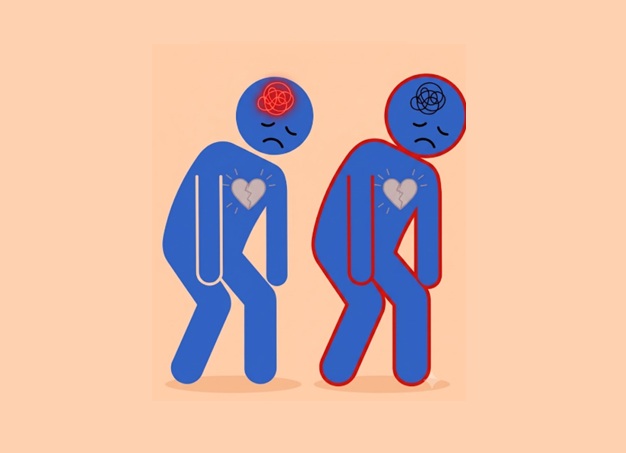
Psychologically, some scientists view Chronic Fatigue Syndrome (CFS) as a psychological illness, meaning that the psychological factor has a major impact that is no less significant than the physical factor. There is a common misconception that what is psychological resembles an illusion, and that a patient simply needs to make an effort to get better. However, the psychological dimension integrates completely with the physical dimension of the illness, and the symptoms, causes, and functional impairments overlap between what we consider “psychological” and “physical” in the ignorant understanding of these terms.
What is psychological is considered physical, and vice versa. Medically, and due to the lack of a single factor or a specific profile of symptoms, the symptoms of Chronic Fatigue Syndrome have been blamed on the physical effects of psychological conditions such as severe depression. Yet, focusing on depression itself does not unify the symptoms, as only 25% of patients currently suffer from depression, while 50–75% of them have experienced it previously during their lifetime.
The manifestation of psychological symptoms in the body within illnesses is known as somatization, but it is ruled out in the case of Chronic Fatigue Syndrome. The prevalence rate of somatization in Chronic Fatigue Syndrome reaches 28%, compared to 0.03% in the general population. However, this diagnosis depends heavily on the examiner’s interpretations; when symptoms are attributed to physical rather than psychological causes, the rates of somatization disorder drop significantly, making it of limited utility in understanding the syndrome.
Just as the proportion of those suffering from depression reaches 25% among Chronic Fatigue Syndrome patients, and somatization stands at 28%, anxiety disorders reach similar percentages among them.
Read: Depression: A Disorder of the Brain or the Body?
The Difference Between Depression and Chronic Fatigue Syndrome
The clear dividing line between depression and Chronic Fatigue Syndrome manifests in distinct physical symptoms, such as swollen lymph nodes and joint pain. The depression-like psychological symptoms experienced by Chronic Fatigue Syndrome patients also differ; CFS patients do not display classic depressive symptoms such as anhedonia, guilt, and lack of motivation, but rather resemble multiple sclerosis (MS) patients.
Severe depression is associated with the upregulation of the hypothalamic-pituitary-adrenal (HPA) axis, causing mild hypercortisolemia (elevated cortisol levels), whereas downregulation of this axis is observed in Chronic Fatigue Syndrome.
The absence of sleep disturbances typical of depression (such as reduced REM latency and increased REM density) is also noted in patients with the syndrome.
Additionally, antidepressants do not help in Chronic Fatigue Syndrome. This is in addition to the previously mentioned statistic that only 25% of those with the syndrome suffer from depression. Furthermore, the medical history of many of them is entirely free of signs of severe depression.
This article is part of a series of articles on Chronic Fatigue Syndrome.
0 Comments